Teaching Terroir: How to Make Vineyard Stories Stick
Why "Sense of Place" Matters (And How to Communicate It Without the Wine Snobbery)
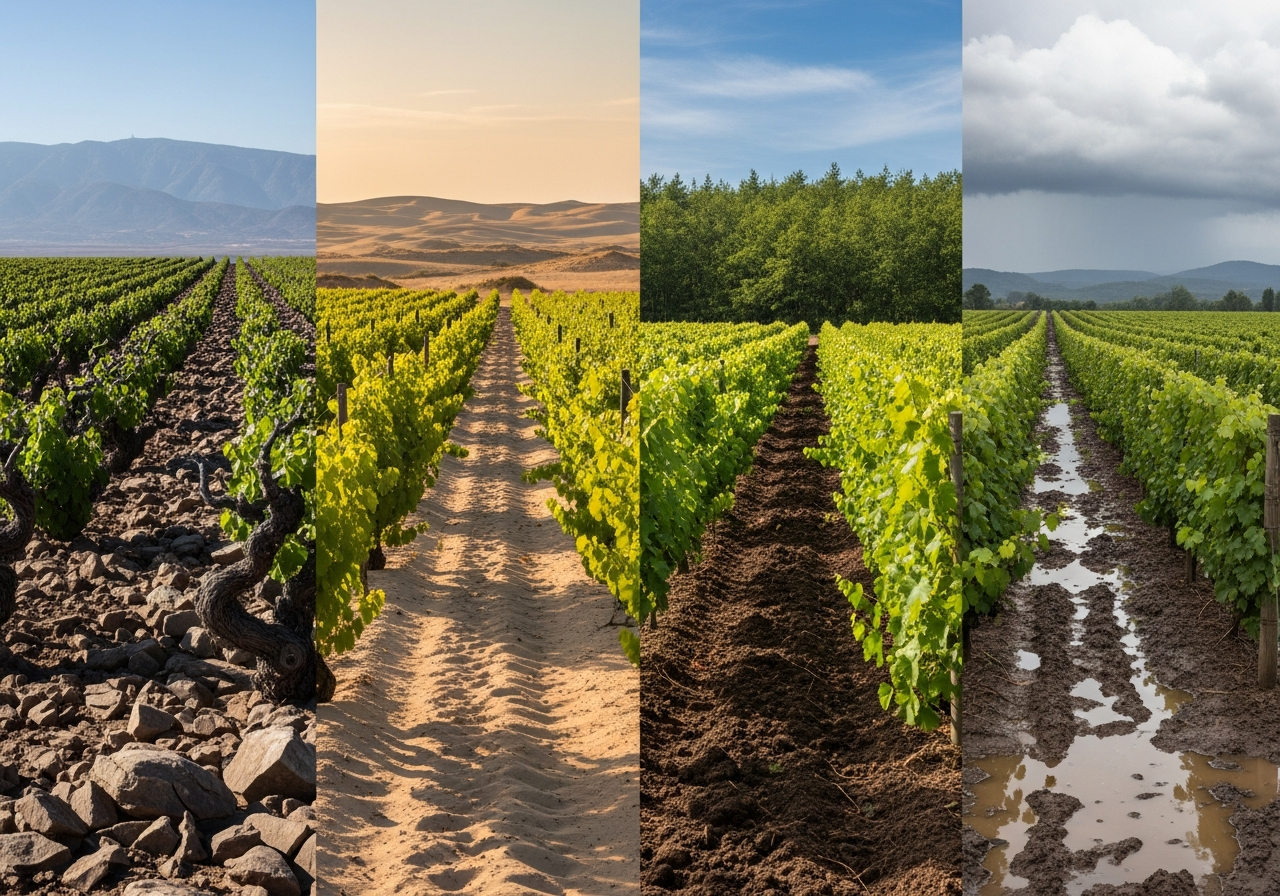
Here's a scene that plays out in tasting rooms across California every day: a guest asks where your grapes come from, and your staff member launches into an explanation about soil composition, microclimates, and aspect. The guest's eyes glaze over. They nod politely. Five minutes later, they can't remember if your vineyard faces east or west, let alone why it matters.
Terroir—that French word we love to throw around—literally means "a sense of place." It's the idea that wine expresses where it comes from: the soil, the climate, the slope of the land, even the hands that tend it. For winemakers and wine professionals, terroir is everything. It's why you planted where you planted, why your Pinot tastes different from your neighbor's Pinot, why vintage variation tells a story.
But here's the disconnect: most guests don't care about terroir the way we do. They care about stories. They care about connection. They care about understanding why this wine tastes the way it does in a way that feels accessible, not academic.
The good news? You can teach terroir in ways that actually stick—ways that make guests care about your vineyard, remember your wines, and feel connected to the place they're visiting. Here's how.
Why Terroir Matters (Beyond the Romance)
Before we talk about communication strategies, let's acknowledge why terroir deserves the attention it gets. Small family wineries can't compete with corporate producers on marketing budgets or distribution networks. What you can compete on is specificity, authenticity, and story.
When guests understand that your Russian River Pinot tastes the way it does because of morning fog that rolls in from the Pacific, or that your old-vine Zinfandel comes from vines your great-grandfather planted in 1923—that's differentiation that can't be replicated. That's the kind of story that travels home with them and gets repeated at dinner parties.
Terroir isn't just romantic wine talk. It's your competitive advantage. The trick is communicating it in ways that resonate.
The Problem with How We Usually Teach Terroir
Most terroir explanations sound like geology lectures. "Our vineyard sits on Goldridge sandy loam with excellent drainage, facing southwest at 800 feet elevation, with a diurnal temperature shift of 40 degrees during growing season."
Technically accurate? Yes. Memorable? No. Engaging? Not unless your guest happens to be a viticulturist.
The problem isn't that the information is wrong—it's that it doesn't connect emotionally. Guests can't visualize Goldridge sandy loam. They don't know what a 40-degree diurnal shift feels like. The information is true but abstract, and abstract information doesn't stick.
The Framework That Works: Make It Concrete
After years of training tasting room staff and watching what actually resonates with guests, I've developed a simple framework: Make terroir concrete, sensory, and human.
1. Replace Technical Terms with Sensory Details
Instead of: "Our vineyard has excellent drainage due to Goldridge sandy loam soil."
Try: "If you walked through our vineyard after a rain, you'd notice the water disappears fast—the
soil is so sandy you can run it through your fingers like an hourglass. That means our vines never
get waterlogged; they have to dig deep for moisture, which concentrates flavors in the grapes."
Notice the difference? The second version creates a mental image. Guests can imagine sandy soil running through their fingers. They can connect "digging deep" with "concentrated flavors" in a way that makes intuitive sense.
2. Connect Terroir to What's in the Glass
Terroir explanations should always circle back to the wine the guest is currently tasting. This isn't theoretical—it's about understanding what they're experiencing right now.
Instead of: "We're in the Petaluma Gap, which brings cool maritime air inland."
Try: "Notice how this Pinot has bright acidity and delicate red fruit rather than jammy flavors?
That's the Petaluma Gap at work. We're close enough to the coast that cool ocean air funnels through
in the afternoons, keeping our grapes fresh and bright even in warm vintages."
Now the guest has connected what they're tasting (bright acidity, red fruit) with where the grapes grew (cool coastal influence). That connection is what makes terroir real.
3. Use Comparisons Guests Can Relate To
Most guests haven't spent much time thinking about vineyard slopes or soil types. But they understand comparisons to things they know.
Instead of: "Our vineyard sits at 1,200 feet elevation on a south-facing slope."
Try: "Imagine planting tomatoes in your backyard. You'd probably put them in the sunniest spot,
right? That's what we did here—this vineyard faces south and sits up high enough to catch sun all
day, which means we get fully ripe Cabernet even in cooler years."
The tomato comparison isn't dumbing it down—it's meeting people where they are and building from there.
Tell Stories, Not Data Points
Facts are forgettable. Stories stick. Every element of terroir can be framed as a story rather than a specification.
Weather becomes narrative: Instead of "2020 was a challenging vintage due to smoke taint," try "In 2020, we had fires all around us. Every morning, our winemaker would come out at dawn to check the fruit. We ended up picking two weeks early—not ideal timing, but it saved the vintage. You can taste that decision: this wine is a bit leaner than usual, more mineral-driven, but it's honest to that year."
Soil becomes discovery: "When my grandfather first planted this vineyard in 1965, he dug down three feet to see what he was working with. He found a layer of volcanic rock—remnants from when this whole area was underwater millions of years ago. That minerality you're tasting? That's ancient history in your glass."
Climate becomes personality: "Our vineyard has a split personality. Mornings, we're wrapped in fog that comes up from the valley—you literally can't see 20 feet in front of you. By noon, it burns off and the vines soak up sun for hours. That push and pull between cool and warm is why this Chardonnay has both richness and refreshing acidity."
Make It Physical: Get Guests Outside When Possible
The best terroir education happens in the vineyard, not the tasting room. If you have any way to get guests out among the vines—even just a quick walk to a nearby block—do it.
When guests can feel the temperature difference between a hilltop and valley floor, touch the soil, see the slope of the land, terroir stops being abstract. They get it viscerally.
Can't physically take guests to the vineyard? Photos work too. A tablet or phone showing images of your vineyard in different seasons, harvest at dawn, your winemaker checking ripeness—these visuals make the story real even when you're inside.
The Three Questions Framework
Train your staff to think about terroir through three questions that guests actually care about:
1. Where does this come from?
Not just "Russian River Valley" but the specific place: "This comes from a five-acre block right at
the base of that hill you can see through the window."
2. What makes that place special?
One or two distinctive characteristics: "That spot gets morning fog but afternoon sun, perfect for
Pinot."
3. How does that show up in the wine?
The connection to what they're tasting: "That's why you're getting these bright cherry notes instead
of darker, jammy fruit."
Three questions. Simple, memorable, effective. It gives staff a framework without scripting them.
Avoid the Terroir Traps
Trap #1: Too Much Information
Resist the urge to explain every factor. Pick one or two distinctive elements of your terroir and go
deep on those. Ten facts that guests forget is worse than one story they remember.
Trap #2: Assuming Prior Knowledge
Terms like "old vine," "estate fruit," "clone selection"—they mean something to us, but guests often
don't know what they signify. Either explain simply or skip the jargon entirely.
Trap #3: Making It Competitive
Avoid comparing your terroir to other regions in ways that put them down. "Our soil is better than
Napa's" sounds defensive. "Our volcanic soil gives us distinctive minerality" sounds confident.
Trap #4: Forcing the Wine Snobbery
Terroir matters, but it's not the only thing that matters. Some guests just want to enjoy wine
without a geology lesson, and that's okay. Read the room. Offer terroir stories to guests who are
engaged; don't force them on people who just want to relax.
Training Your Staff to Tell Your Story
Your tasting room staff should be able to answer these prompts naturally and confidently:
• "This vineyard is special because..."
• "When you taste this wine, you're tasting..."
• "If you visited our vineyard right now, you'd see/feel..."
• "The biggest challenge we face here is..."
• "My favorite thing about this site is..."
Practice these conversational prompts in staff meetings. Have team members tell the vineyard story in their own words. You'll quickly identify what's landing and what needs refining.
Why This Approach Works
Guests don't remember facts. They remember how you made them feel. When terroir is communicated as story, sensory detail, and human connection, it stops being intimidating wine knowledge and starts being the kind of insider access that makes people feel special.
"I learned that their Zinfandel comes from vines planted in the 1920s by a family from Italy" is a story worth retelling. "I learned about Goldridge sandy loam soil composition" is not.
The wineries that succeed at teaching terroir are the ones that make it feel like a gift rather than a lecture—an invitation to understand something beautiful and specific, told by people who genuinely love the place they're talking about.
Bringing It All Together
Teaching terroir isn't about proving how much you know. It's about sharing what makes your vineyard unique in ways that help guests understand and appreciate what they're drinking.
Replace jargon with sensory details. Turn data points into stories. Connect what's in the glass to where the grapes grew. Make it concrete, visual, and human.
When terroir education is done right, guests leave your tasting room with more than wine—they leave with a connection to place, an appreciation for the work you do, and stories they'll actually remember and repeat. That's the kind of experience that turns visitors into advocates.
Your vineyard has a story. Tell it well.
Help Guests Take Your Story Home
BibiVini makes vineyard stories accessible long after guests leave your tasting room. Beautiful drone footage, detailed wine information, and the stories that make your wines special—all available on their phones via QR code. Your guests get to relive the experience. You get to stay connected.
About the Author: Pete is a Certified Sommelier with a decade of experience in California wine country. He holds a degree in Marketing and Psychology from Eastern Michigan University and founded BibiVini to help small wineries compete in the digital age.